Travel Tips
Nepal Spring Flowers Guide: Beyond the Rhododendron
Nepal's spring bloom extends far beyond rhododendrons. Primulas, orchids, blue poppies, and alpine wildflowers transform hillsides and high meadows from February through June.
Overview
Rhododendrons get most of the attention in Nepal's spring flower calendar, and rightly so — they dominate the landscape from 1,800 to 4,000 m. But Nepal's botanical diversity extends well beyond a single genus. The country lies at the junction of the Palearctic and Indomalayan biogeographic realms, producing extraordinary plant diversity. Spring flowers in Nepal range from subtropical orchids in river valleys to the elusive Himalayan blue poppy near the tree line, with dozens of compelling species in between.
Bloom Calendar by Plant Group
Orchids (1,000–2,500 m): February–May
Nepal has over 300 orchid species. The subtropical foothills, particularly the Ilam district in eastern Nepal and the Arun Valley, hold spectacular wild orchid populations. Dendrobium and Coelogyne species bloom in the lower subtropical zone from February. Higher elevation cool-temperate orchids peak in May.
Primulas (3,000–5,000 m): April–June
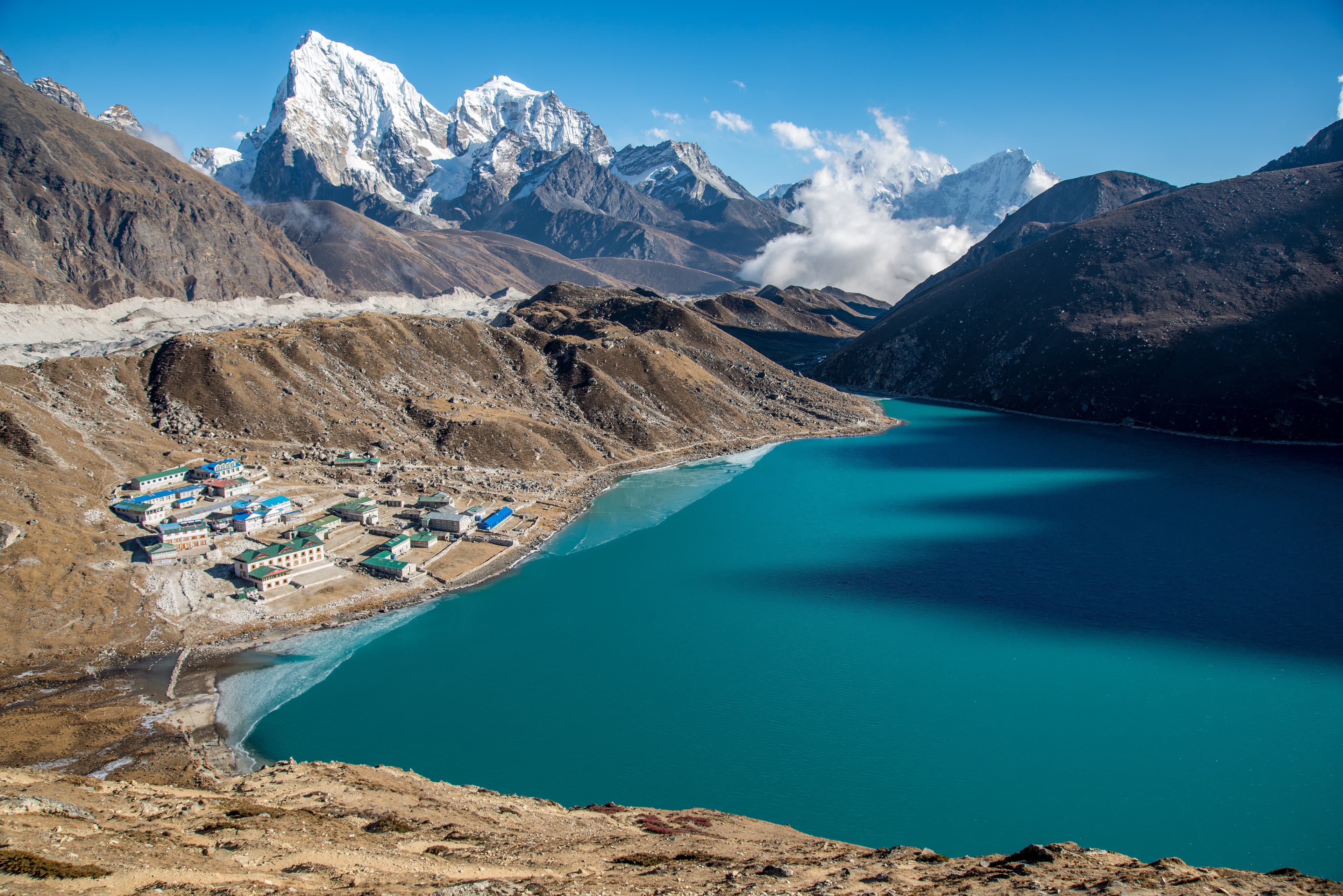
Himalayan primulas are among the most beautiful alpine flowers in Asia. Nepal has over 50 species, ranging from the common purple Primula denticulata (drumstick primula) to rare yellow and red species found only above 4,500 m. The high meadows around Gosaikunda, Gokyo, and the Annapurna Sanctuary are prime primula habitat in May.
Blue Poppy — Meconopsis (4,000–5,500 m): May–July
The Himalayan blue poppy (Meconopsis betonicifolia and related species) is one of the most sought-after botanical sights in Asia. Nepal is within its core range. The flowers appear after snow melts at high elevations, typically late May at 4,000 m and into June above 5,000 m. High meadows near Gosaikunda, the Langtang high camp areas, and the Annapurna Sanctuary are documented locations.
Planning this trip? 🎒
Don't stress about transport or guides. Sajilo offers verified cabs, luxury tourist buses, and expert guides across Nepal.
Gentians (3,500–5,000 m): August–October
Gentians (brilliant blue, with some yellow species) bloom in late monsoon and early autumn across Nepal's alpine zones. They carpet high meadows in the Gosaikunda, Khumbu, and Annapurna regions in September and early October.
Alpine Asters and Composites (3,000–4,500 m): Late August–October
A diverse group of daisy-family flowers in purple, yellow, and white bloom in the late monsoon and autumn transition, filling meadows as rhododendrons and primulas are long past.
Best Locations for Spring Wildflowers
Gosaikunda and Laurebina La: One of the richest concentrations of high-altitude wildflowers in the Langtang region. The meadows between Laurebina La and Gosaikunda hold primulas, blue poppies, and numerous other species in late May and June.
Annapurna Sanctuary (Base Camp area): The approach through the Annapurna Sanctuary (Modi Khola gorge) passes through spectacular rhododendron forest, and the basin above holds primulas and alpine wildflowers in May.
Gokyo Valley and surrounding ridges: High meadows above the Gokyo Lakes host significant wildflower populations in late May. The lack of heavy trekking traffic compared to the EBC main trail means the meadows are less trampled.
Ilam District (Eastern Nepal): Nepal's tea-growing district is one of the finest orchid habitats in the country. The subtropical forests hold dendrobium, coelogyne, and other orchid species in bloom from February through April.
Photography Approach
High-altitude wildflowers are small and grow in exposed windswept habitats. A macro lens (90–105 mm) is the standard tool for capturing individual flowers in detail. Getting low (prone on the ground) eliminates distracting backgrounds and brings the flower into its natural context. Early morning is best — petals are dew-fresh and wind is minimal before 10 am at high altitude.
FAQ
Q: Can I identify wildflowers without botanical training?
A small number of field guides cover Nepal's Himalayan flora — Polunin and Stainton's Flowers of the Himalaya (Oxford) is the standard reference. Several smartphone apps (PlantNet, iNaturalist) can identify species from photographs with reasonable accuracy in the Himalayan context.
Q: Is the Himalayan blue poppy really blue?
Yes, genuinely. The color is a true sky blue to violet-blue depending on species and individual variation. Seeing it for the first time at altitude is a botanical experience that stays with you.