Travel Tips
Nepal Snowfall Season in the Mountains: What to Know
When snow arrives in Nepal's mountains, how much falls at different elevations, and how snowfall affects trekking routes, road access, and high-pass crossings.
Overview
Snow is a defining feature of the Himalayan landscape, but snowfall timing and depth vary enormously by elevation, region, and year. Understanding Nepal's snowfall season helps trekkers plan pass crossings, choose the right gear, and avoid being caught by unexpected closures on high routes.
When and Where Snow Falls
Below 2,000 m: Snow is extremely rare. Kathmandu (1,400 m) has received snow a handful of times in recorded history, most recently in 2012 and 2015. When it does snow at this elevation, it is a headline event.
2,000–3,000 m: Light snowfall possible from November through February. Falls are usually thin and melt within a day or two at lower altitudes in this range. Higher sections may accumulate a few centimeters that persist for a week.
3,000–4,000 m: Regular snowfall from December through February. Langtang village (3,430 m), Namche Bazaar (3,440 m), and Manang (3,500 m) receive meaningful snowfall multiple times each winter. Trails become icy in shaded sections. Gaiters and traction devices are useful.
Planning this trip? 🎒
Don't stress about transport or guides. Sajilo offers verified cabs, luxury tourist buses, and expert guides across Nepal.
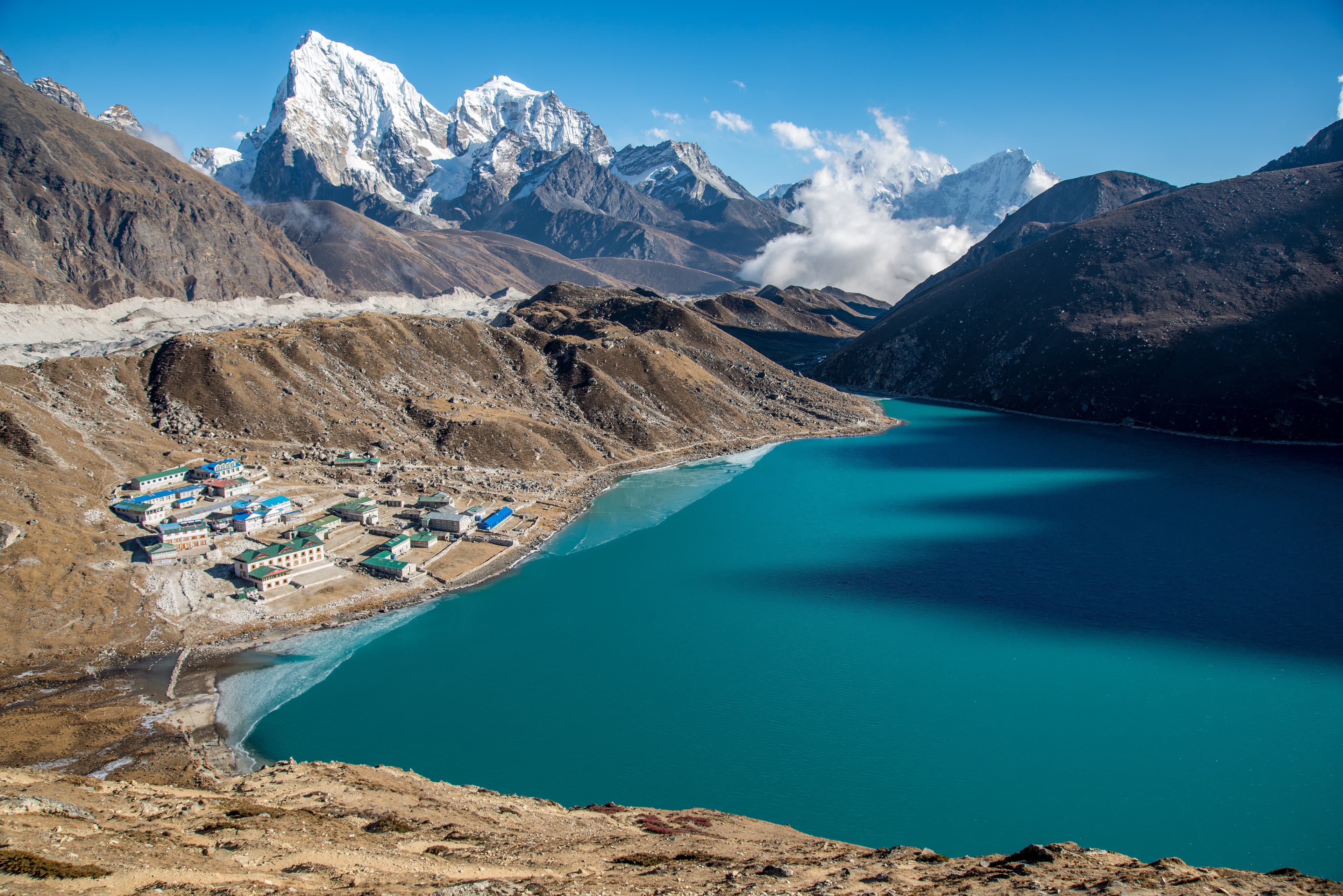
Above 4,000 m: Heavy snowfall from November through March. High mountain teahouses (Gorak Shep, Thorong Phedi, Kyanjin Gompa) can be buried under 1–3 m of accumulated snow in severe winters. This zone requires full winter camping equipment if lodges close.
High Passes (above 5,000 m): Thorong La, Renjo La, Cho La, and Kongma La accumulate snow from October onward and can close completely from late November through March. Snowfall in October is unusual but occurs in storm years.
Snowfall and Pass Closures
High-pass closures are the most operationally significant consequence of snowfall for trekkers.
Thorong La (5,416 m — Annapurna Circuit): Typically open March to early November. November closures occur in storm years. Closed most winters from December to February. Premature October snow closures happen in roughly one out of four years.
Renjo La, Cho La, Kongma La (Everest region): These three passes (the Three Passes route) close sooner in autumn and open later in spring than the main Namche-EBC trail. December closures are common. March reopening is typical.
Larkya La (5,106 m — Manaslu Circuit): Similar pattern to Thorong La. Open from roughly March to late November. Heavy October snowstorm closures occur occasionally.
Snowfall in Spring and Its Effects
Pre-monsoon snowfall at high elevations occurs in April and May. This is not the steady accumulation of winter but rather storm-driven snowfall that can deposit 30–60 cm on high passes overnight and then melt within days. Summit attempts on Everest and other 8,000 m peaks must account for these spring snow cycles. For trekkers, a spring snowstorm typically delays pass crossings by 1–3 days.
Gear for Snow Conditions
For trekking on routes with potential snow:
- Gaiters to keep snow out of boots
- Microspikes for icy sections on groomed or packed snow
- Full crampons for technical winter mountaineering only — not needed for standard trekking routes
- Trekking poles with snow baskets for stability on soft snow
- Warm waterproof gloves (not just liner gloves) and a full balaclava for blizzard conditions
FAQ
Q: Can I see the Everest region covered in snow from Kathmandu?
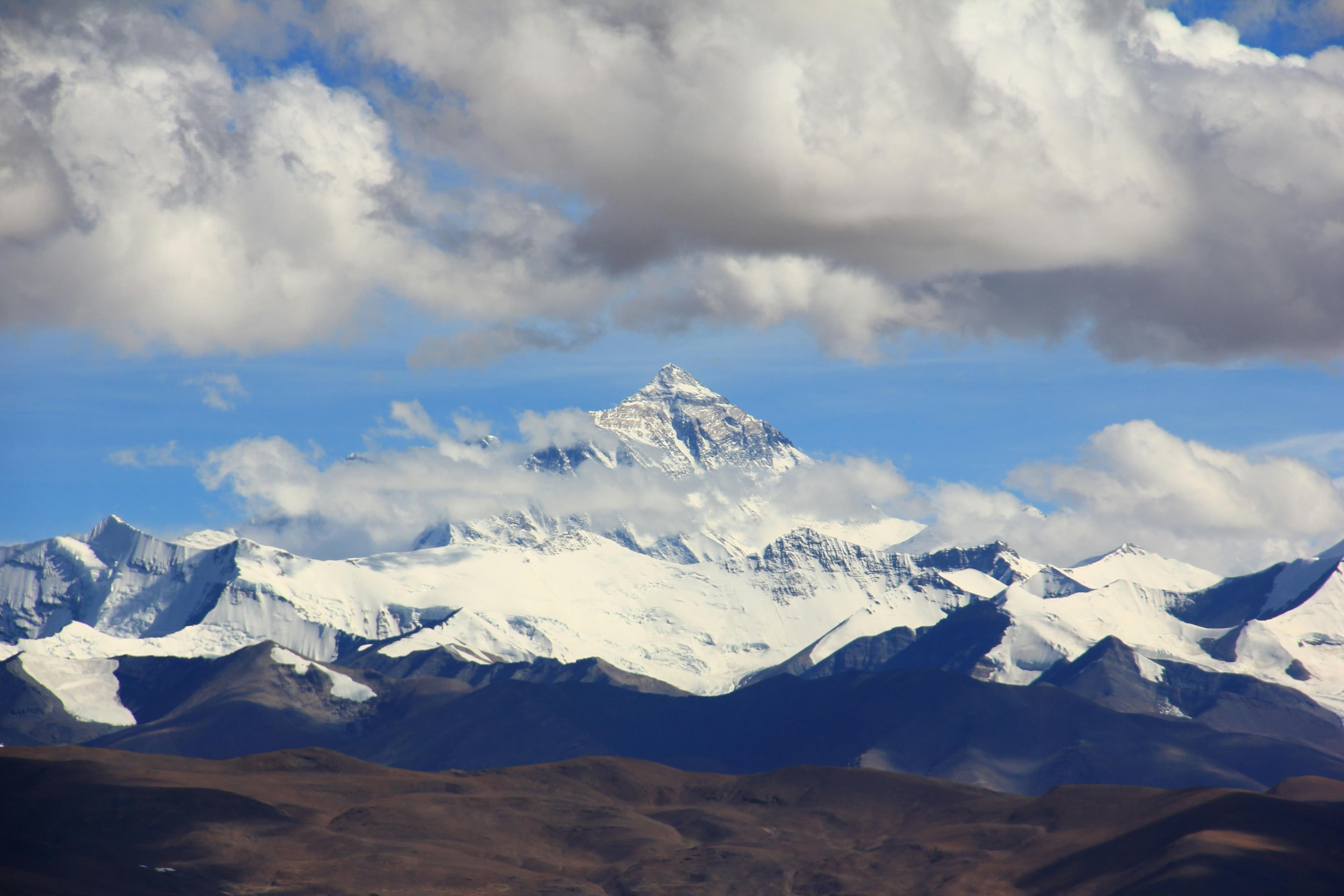
On very clear days in winter (December–February), the high Himalayan peaks including those in the Everest group are visible from elevated viewpoints near Kathmandu — Nagarkot (2,175 m), Nagarjun Hill, and Chandragiri. The peaks are always snow-covered — the question is atmospheric clarity, which is highest after rain or frost.
Q: Do heavy snowfall years affect the entire mountain range equally?
No. Snowfall distribution in Nepal's mountains is geographically variable. The eastern ranges (Kanchenjunga, Makalu) are wetter than the western ranges (Dhaulagiri, Mustang area). The Khumbu sits in a partial rain shadow that reduces but does not eliminate snowfall compared to more southerly regions.