Culture
Taleju Bhawani Temple: Guide to the Malla Dynasty's Royal Goddess
Taleju Bhawani is the tutelary goddess of the Kathmandu Valley's Malla kings, and her temples in all three Durbar squares are among Nepal's most architecturally significant — though mostly restricted to Hindus.
Overview
Taleju Bhawani is the royal tutelary goddess (Tantric goddess of divine power) who became the pre-eminent deity of the Malla kings of the Kathmandu Valley. She is enshrined in prominent temples in all three historic Durbar squares — Kathmandu, Patan, and Bhaktapur — and her worship is inseparable from the religious legitimacy that the Malla rulers claimed for their authority. All three Taleju temples are architecturally significant, and the Taleju Temple of Kathmandu is the most impressive.
The Goddess Taleju
Taleju Bhawani is believed to have originated as a goddess from the Deccan or South India who was brought to the valley — according to tradition — by the early Malla king Harisimhadeva when he fled south India in the 14th century. In the valley, she was assimilated into the local Shakta and Tantric traditions and became the most powerful goddess of the Malla court.
Her worship involved secret Tantric rituals accessible only to initiates and the royal family. The king's right to rule was understood as dependent on her blessing. She is closely associated with the Kumari tradition — the living Kumari is considered one of her manifestations.
Kathmandu's Taleju Temple
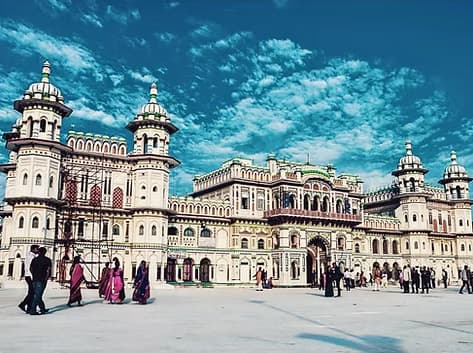
The Taleju Temple in Kathmandu Durbar Square is a 12-storey pagoda rising above the surrounding palace buildings. It was built by King Mahendra Malla in 1564 and at the time of construction was the tallest building in the valley — a statement of royal power. The temple sits on a stepped plinth with multiple subsidiary shrines and is enclosed within a high wall.
Planning this trip? 🎒
Don't stress about transport or guides. Sajilo offers verified cabs, luxury tourist buses, and expert guides across Nepal.
The temple's upper section is reserved for Hindu worshippers and for the annual opening during the Dasain festival, when a large number of goats and buffaloes are sacrificed in the courtyard as an offering to the goddess. During Dasain, the public is permitted to enter the temple precincts briefly — making this the only time in the year when non-initiated Hindus (and, to a limited degree, the general public) may access the courtyard.
Architectural details: The multi-tiered roofs are gilded copper. The carved wooden struts depict the eight Ashta Matrikas (mother goddesses). The main entrance gate is flanked by guardians, and the compound includes subsidiary shrines to Mahalakshmi, Kumari, and Ganesh.
Patan's Taleju Temple
The Taleju temple in Patan Durbar Square (Degutalle) is incorporated directly into the palace structure and is smaller than Kathmandu's, though equally ornate. It served as the personal chapel of the Patan Malla kings. It too is normally closed to non-Hindus.
Bhaktapur's Taleju Temple
In Bhaktapur, the Taleju shrine is located within the royal palace complex and is accessible only through the inner palace courtyard. The famous Golden Gate (Sun Dhoka) leads to a courtyard where Taleju is worshipped.
Practical Information
Kathmandu Taleju Temple: Visible from the square; generally restricted to Hindus. Open to broader public briefly during Dasain (timing varies by year). Included within the Kathmandu Durbar Square foreign visitor fee.
Dasain: The most important time for Taleju worship across all three squares. The major animal sacrifice at Kathmandu's Taleju occurs on Mahanavami (ninth day of Dasain). This is significant and deeply traditional; visitors who attend should be prepared for what they will see.