Culture
Newar Civilization: Masters of Kathmandu
The Newar people created the art, architecture, and urban culture that defines the Kathmandu Valley. Their civilisation produced works of religious and artistic genius that scholars are still unravelling.
The Newars are the indigenous inhabitants of the Kathmandu Valley — a community defined not by race but by the shared culture, language, and urban civilisation that developed over two millennia of valley life.
Who Are the Newars?
Nepal Bhasha (Newari), the Newar language, belongs to the Sino-Tibetan family — making it linguistically distinct from Indo-Aryan Nepali (the national language). The Newars developed a unique synthesis of Hindu and Buddhist traditions, simultaneously maintaining Hindu caste structure and Vajrayana Buddhist monasteries (bahals) in the same neighbourhoods. Many Newar families maintain both Hindu and Buddhist priests for different ritual occasions.
Newar Architecture
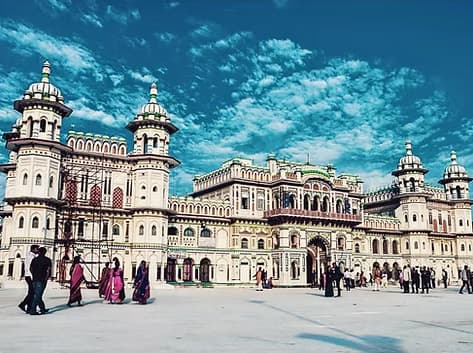
Newar architecture is immediately recognisable: multi-storey brick pagodas with intricately carved wooden windows (lattice work, peacock windows, erotic torana), tiered temple platforms (shikhara and pagoda styles), and bahals (courtyards housing Buddhist monasteries) hidden behind unmarked doors in dense urban fabric. The Peacock Window of Bhaktapur, the Golden Gate of Bhaktapur Palace, and the 55-Window Palace of Bhaktapur exemplify the apex of the Newar woodcarving tradition.
Newar Trade and Economy
Newars historically dominated Nepal's internal and trans-Himalayan trade. Newar traders established communities (known as Newar colonies) in towns throughout Nepal and into Tibet. Lhasa's Newar merchant quarter was a distinctive neighbourhood trading Kathmandu's metalwork and cloth for Tibetan wool and salt. The Thakali people's merchant success in the Kali Gandaki was partly modelled on Newar commercial organisation.
Planning this trip? 🎒
Don't stress about transport or guides. Sajilo offers verified cabs, luxury tourist buses, and expert guides across Nepal.
Newar Festivals
The Newar ritual calendar is extraordinarily dense — major festivals include Indra Jatra (chariot procession of the living goddess Kumari), Bisket Jatra (Newar New Year with chariot and pole ceremony in Bhaktapur), Gai Jatra (procession honouring the recently dead), and Dashain and Tihar (shared with the broader Hindu tradition but celebrated with distinctive Newar elements).
FAQ
Are Newars Hindu or Buddhist? Both — and neither exclusively. Newar civilisation synthesised Hindu and Buddhist traditions into a distinctive system where the same person may worship at both Hindu temples and Buddhist bahals without contradiction.
How many Newars are there? An estimated 1.3-1.5 million Newars live in Nepal, concentrated in the Kathmandu Valley. The Newar diaspora in India (particularly Darjeeling and Sikkim) and internationally is significant.
What is the Kumari? The Kumari (Living Goddess) is a pre-pubescent girl selected from the Shakya caste (Newar Buddhists) who is worshipped as the living embodiment of the goddess Taleju. She lives in the Kumari Ghar in Kathmandu's Durbar Square until puberty, when a new Kumari is selected.