Trekking
Climate Change and the Himalayas: What Is Being Lost
Himalayan glaciers are retreating faster than almost anywhere on Earth. The consequences extend far beyond Nepal — threatening water security for over a billion people across South and Central Asia.
The Hindu Kush Himalayan Assessment — the most comprehensive scientific review of the region — concluded in 2019 that the Himalayas will lose at least one-third of their glacier ice by 2100 even under the most optimistic emissions scenarios.
The Scale of Loss
The Himalayas and Hindu Kush contain the world's largest concentration of ice outside the polar regions — an estimated 600 billion tonnes stored across 54,000 glaciers. Average glacier temperatures in the region have risen 1.5°C since 1950, roughly double the global average warming rate. Satellite measurements between 2000 and 2020 showed that Himalayan glaciers lost ice at an average rate of 0.5 metres water equivalent per year — significantly faster than previous estimates.
Water Security Crisis
Himalayan glaciers act as freshwater reservoirs, releasing meltwater that supplements river flows during dry seasons. Rivers fed by Himalayan glaciers include the Indus (Pakistan's lifeline), the Ganges (India), the Brahmaputra (Bangladesh, India, Tibet), the Yangtze (China), and the Mekong (Southeast Asia). An estimated 240 million people in the Himalayan region and 1.65 billion downstream are directly dependent on these river systems.
The Surge Before the Collapse
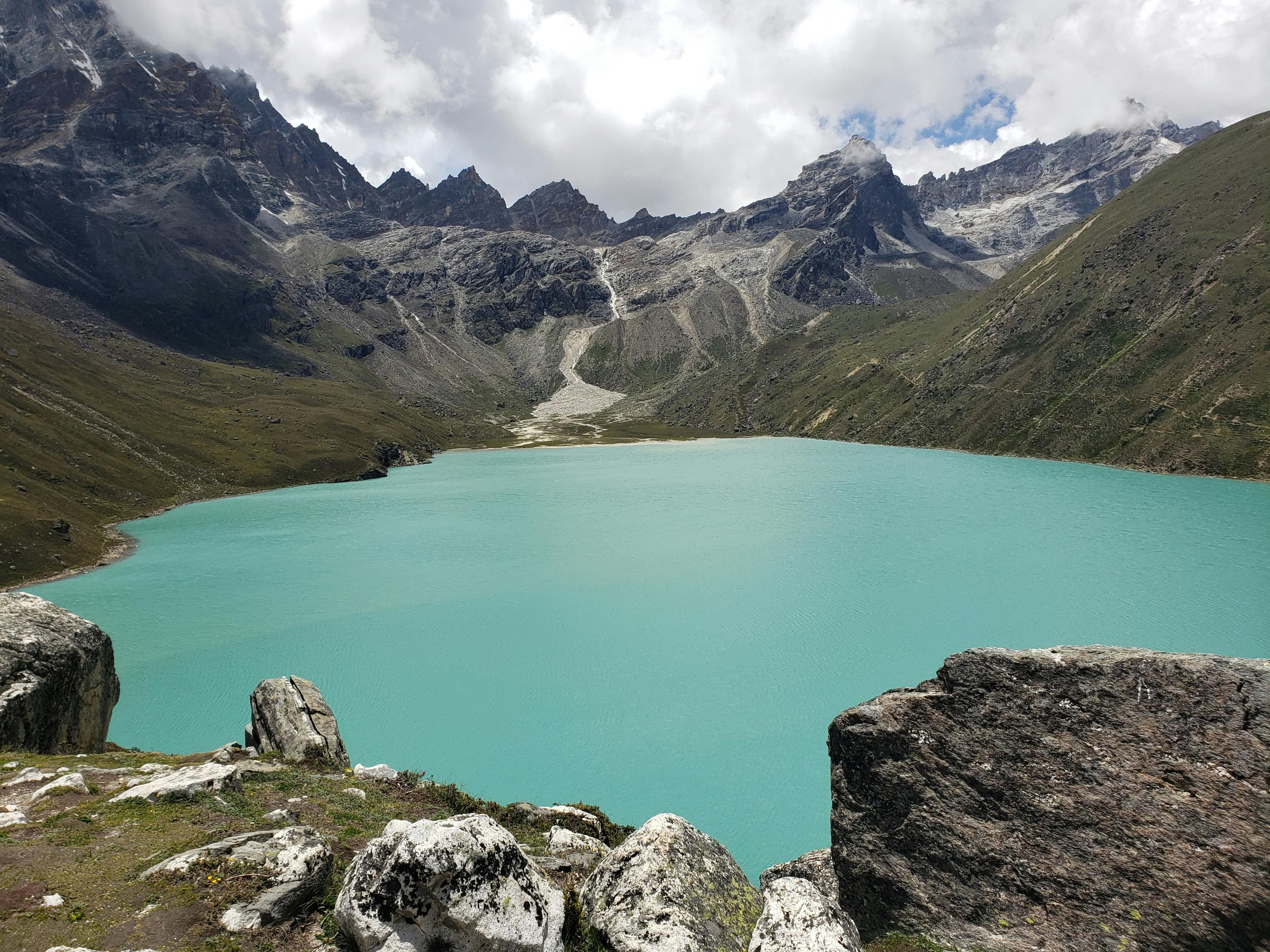
A counterintuitive short-term effect is that many glaciers produce more meltwater as they retreat — temporarily increasing river flows before declining. This "peak water" effect means some regions experience floods before eventual droughts. Glacial Lake Outburst Floods (GLOFs), where ice or moraine dams fail catastrophically, are increasing in frequency. Nepal has already documented multiple GLOFs destroying downstream villages.
Planning this trip? 🎒
Don't stress about transport or guides. Sajilo offers verified cabs, luxury tourist buses, and expert guides across Nepal.
Nepal's Response
Nepal established the Department of Hydrology and Meteorology to monitor glacial lakes. ICIMOD (International Centre for Integrated Mountain Development) based in Kathmandu coordinates regional research and early warning systems. Communities around high glacial lakes are being relocated or provided with GLOF early warning systems. The 2015 Melamchi project, despite being disrupted by earthquake and floods, represents Nepal's attempt to diversify water sources.
FAQ
Which Himalayan glacier is retreating fastest? Gangotri Glacier in the Indian Himalayas has retreated over 22km since 1780 and is one of the most studied. In Nepal, the Khumbu Glacier has thinned by 50+ metres at lower elevations since the 1950s.
Can reforestation help protect glaciers? Forests regulate local moisture and temperature but cannot directly protect high-altitude glaciers. The primary driver of loss is global greenhouse gas emissions requiring international action.
Is Nepal vulnerable to GLOFs? Yes — Nepal has at least 21 potentially dangerous glacial lakes identified. The 2023 GLOF in Sikkim (neighboring India) destroyed a hydropower dam and killed dozens, highlighting regional vulnerability.